


Learning doesn't always have to happen at a desk.
For children, some of the most meaningful learning experiences happen when they are moving, exploring, asking questions, and figuring things out on their own. A backyard can provide exactly that kind of environment.
Instead of thinking of outdoor play as simply a break from learning, families can use the backyard as an extension of everyday learning. A garden can become a science lesson. A soccer goal can introduce basic math and physics. A trampoline can encourage children to think about balance, movement, and coordination.
The best part is that children often don't feel like they are studying.
They're simply playing.
With a little creativity, your backyard can become a place where children learn, explore, and develop new skills while enjoying time outdoors
Turn Nature Into a Science Lesson
You don't need expensive science equipment to introduce children to science.
Your backyard is already full of things to investigate.
Encourage kids to observe:
- Different types of plants
- Insects and birds
- Clouds and weather
- Soil and rocks
- Shadows and sunlight
- Changes throughout the seasons
Ask simple questions:
Why are some leaves different colors?
Where do insects like to hide?
Why is the ground warmer in some places than others?
What happens to a plant when it doesn't get enough water?
Instead of immediately giving children the answer, encourage them to make a guess first.
This simple process—observe, ask, predict, and discover—is an important part of scientific thinking.
A backyard doesn't need to look like a classroom to become a place where children can develop curiosity about the world around them.
Practice Math Through Backyard Games
Math can be much more engaging when children can move around while using it.
A backyard provides plenty of opportunities for simple math challenges.
For example, set up a soccer goal and create a scoring game.
You could assign:
- 1 point for a basic shot
- 2 points for hitting a target
- 3 points for a more difficult shot
Then ask children to keep score.
Older kids can calculate totals, compare scores, or work out percentages.
You can also use everyday backyard activities to practice:
- Counting
- Addition
- Subtraction
- Distance
- Time
- Measurement
- Basic geometry
A simple soccer game can become an opportunity to practice numbers without feeling like traditional homework.
For families looking to combine sports and learning, a backyard soccer goal can become part of an everyday play space where children practice both physical and problem-solving skills.
Explore Backyard Soccer Goals →
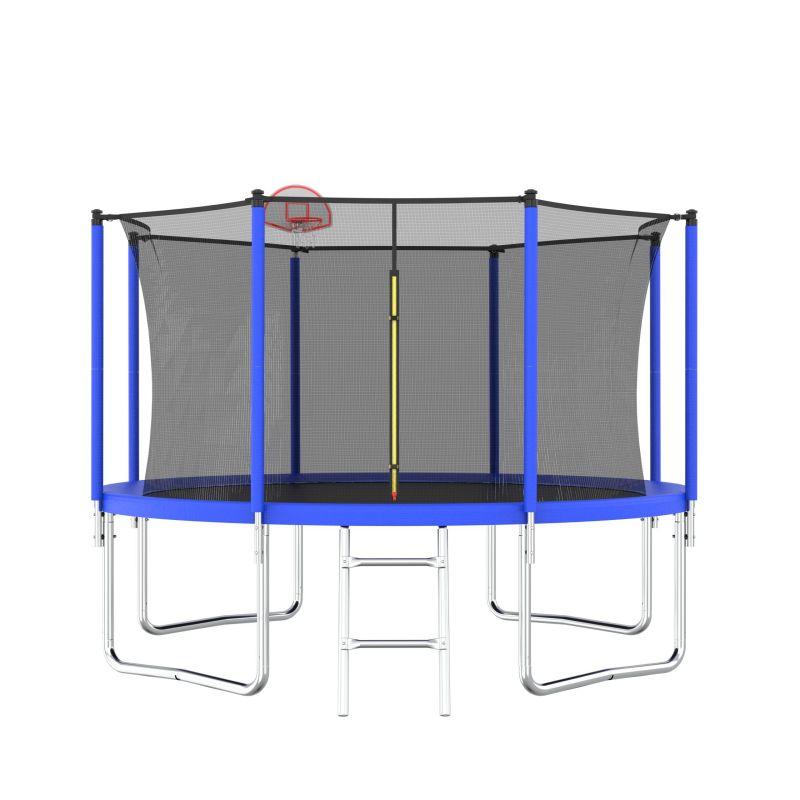
Explore Physics With a Trampoline
A trampoline can be more than a source of physical activity.
It can also create opportunities for children to become curious about movement and physics.
Ask questions such as:
Why do you bounce higher when you jump harder?
What happens when you change the way you land?
Why does your body move differently when you jump?
What happens if two people jump at different times?
You don't need to teach complicated physics formulas.
Instead, let children safely observe how different movements affect their bodies and the way they bounce.
They can begin to explore concepts such as:
- Force
- Motion
- Balance
- Gravity
- Coordination
The experience comes first. The scientific explanation can come later.
A trampoline can therefore be both an active play space and an opportunity for children to become curious about how movement works.
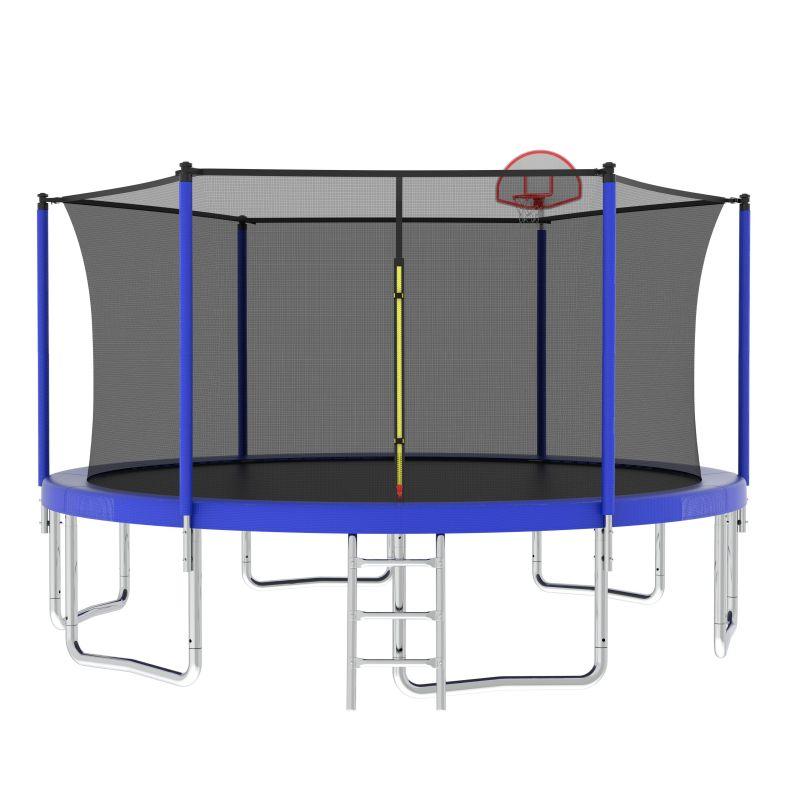
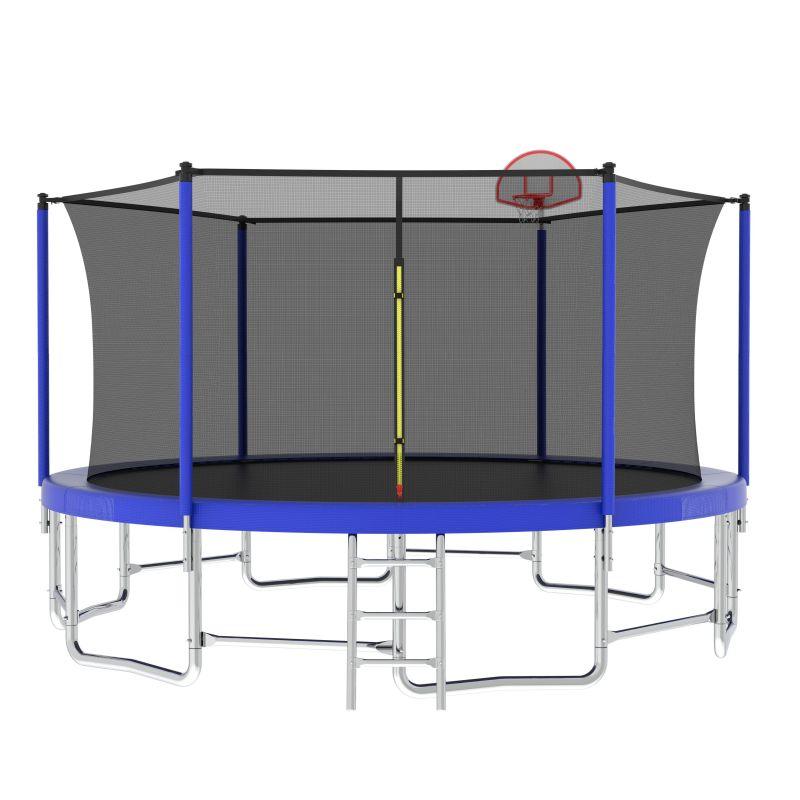
Explore Trampolines for Kids →
Always follow the trampoline manufacturer's safety instructions, including appropriate supervision, occupancy limits, and age recommendations.
Create an Outdoor Reading Space
Learning outdoors doesn't always have to involve physical activity.
Sometimes, the best way to encourage learning is simply to create a comfortable place to read.
Set up a small outdoor reading area with:
- A comfortable chair
- Outdoor cushions
- A shaded area
- A small table
- A basket of books
Children can spend part of their reading time outside instead of always staying indoors.
You can even choose books that connect with what's happening around them.
If your child is reading about animals, for example, encourage them to look for birds or insects in the backyard.
If they're learning about plants, they can compare illustrations in a book with the plants growing around them.
This creates a connection between what children read and what they experience in the real world.
Let Kids Grow Something
Gardening is one of the simplest ways to introduce children to responsibility and science.
Give children their own small gardening project.
They can choose a plant, prepare the soil, plant seeds, water them, and observe how they change over time.
Along the way, children learn about:
- Plant life cycles
- Weather
- Water
- Soil
- Responsibility
- Patience
You can also encourage them to keep a simple growth journal.
They might record the height of a plant each week, draw pictures of its changes, or write down when the first flower appears.
There's also something especially rewarding about eating something they helped grow.
A small garden can turn an ordinary backyard into a living classroom.
Encourage Problem-Solving Through Outdoor Play
Some of the most valuable learning happens when children have to figure something out themselves.
Create simple challenges that require them to think rather than simply follow instructions.
For example, ask children to design a backyard obstacle course.
Give them a few safe items and ask:
Can you make the course more challenging?
Can you create a course that younger children can also complete?
How can you make the course faster without making it unsafe?
You can also challenge children to build a small shelter, design a target game, or create their own backyard challenge.
These activities encourage:
- Creativity
- Planning
- Decision-making
- Problem-solving
- Trial and error
Children don't always need to be given the solution.
Sometimes, giving them the opportunity to make mistakes and try again is where the most valuable learning happens.
Learn Teamwork Through Sports
Sports naturally create opportunities for children to learn how to work with others.
A backyard soccer game, for example, can teach much more than how to kick a ball.
Children learn to:
- Communicate
- Take turns
- Follow rules
- Make decisions
- Cooperate
- Handle winning and losing
Try changing the format of the game.
Instead of simply playing against each other, give children a shared challenge:
Can your team score five goals in ten minutes?
Now the focus shifts from individual competition to teamwork.
This can be particularly valuable for families with multiple children, because siblings can learn how to cooperate while still enjoying friendly competition.
Explore Weather and the Changing Seasons
The backyard is constantly changing.
That makes it an excellent place for children to learn about weather and seasonal changes.
Encourage kids to keep a simple outdoor journal.
They could record:
Date:
Temperature:
Weather:
Clouds:
Wind:
What changed in the backyard?
After several weeks, they can compare their observations.
They may notice that:
- Days become shorter
- Temperatures change
- Plants grow
- Leaves change color
- Different animals appear
These small observations help children understand that nature is constantly changing.
It also gives them a reason to continue exploring the backyard throughout the year instead of seeing outdoor play as something limited to summer.
Bring Creativity Outdoors
Art doesn't have to stay inside.
Take drawing and creativity outdoors.
Children can:
- Draw plants
- Sketch insects
- Paint rocks
- Make nature collages
- Draw backyard maps
- Photograph interesting objects
You can also challenge children to create a map of their backyard.
Ask them to identify:
- The house
- Trees
- Play areas
- Garden
- Seating areas
- Favorite places
This combines creativity with observation and basic spatial thinking.
For younger children, simply drawing what they see can be a fun way to practice observation.
Older children can create more detailed maps or even design their ideal outdoor space.
Let Kids Design Their Own Backyard
Perhaps the most interesting learning activity is to let children become the planners.
Ask:
If you could redesign our backyard, what would you change?
Give them a piece of paper and let them draw their ideal backyard.
They might include:
- A trampoline
- Soccer goal
- Swing
- Garden
- Reading corner
- Outdoor games
- A place for parents to relax
Then ask them to explain why they chose each feature.
This simple activity teaches children to think about:
- Space
- Function
- Priorities
- Creativity
- Planning
It also gives parents an interesting insight into what their children actually want from their outdoor space.
More importantly, it changes the way children think about their backyard.
Instead of simply being a place they use, it becomes a space they can help create.
Learning Doesn't Have to Feel Like School
One of the biggest advantages of backyard learning is that it doesn't need to feel like another assignment.
Children can learn while:
- Jumping
- Running
- Gardening
- Reading
- Building
- Drawing
- Playing sports
- Exploring nature
The backyard gives them room to make mistakes, try again, and discover things independently.
That's an important difference between simply telling children something and allowing them to experience it.
Outdoor play can encourage curiosity because children are interacting directly with the world around them.
A question about a plant can lead to an experiment.
A soccer game can lead to a math challenge.
A trampoline can lead to questions about movement.
A backyard map can lead to conversations about space and design.
Learning can happen naturally when children have the freedom to explore.
How to Create a Backyard That Encourages Learning
You don't need to turn your entire backyard into a classroom.
Instead, think about creating different areas that support different types of play and learning.
Active Play Zone
A trampoline or soccer goal can encourage movement, coordination, and sports practice.
Nature Zone
A small garden or planting area can encourage observation and responsibility.
Creative Zone
A table or outdoor workspace can give children a place to draw, build, and create.
Quiet Zone
A shaded seating area can become a place for reading, relaxing, and observing nature.
The goal isn't to fill the backyard with equipment.
It's to create an environment that gives children different ways to interact with the space.
If you're looking to build a backyard around different types of play, explore our backyard play equipment to find options that can become part of your family's outdoor space.
Explore Backyard Play Equipment →
The Backyard Can Grow With Your Child
One of the most valuable things about a well-designed backyard is that its purpose can change as children grow.
A young child might spend most of their time exploring nature and playing simple games.
As they get older, they may become more interested in:
- Sports
- Fitness
- Building projects
- Gardening
- Creative activities
- Independent outdoor time
A trampoline might become a place for active play.
A soccer goal might become a place for regular training.
A garden might become a long-term project.
A quiet outdoor area might eventually become a place where older children read, relax, or spend time with friends.
The backyard doesn't have to stay the same.
It can grow alongside your family.
Final Thoughts
A backyard doesn't have to be a classroom to become a valuable learning environment.
Sometimes learning happens when children are trying to figure out how far they can jump, how quickly a plant grows, how to score a goal, or how to build something that doesn't fall apart.
Outdoor play gives children opportunities to move, experiment, create, and solve problems in ways that feel natural.
And for families, that may be one of the biggest opportunities hiding right outside the back door.
A great backyard isn't just a place where kids play.
It's a place where they can discover the world.
Frequently Asked Questions
Can children really learn through outdoor play?
Yes. Outdoor play can provide opportunities to practice physical coordination, observation, problem-solving, communication, creativity, and basic concepts in science and math.
What can kids learn in the backyard?
Depending on the activity, children can explore nature, weather, gardening, physics, mathematics, teamwork, creativity, and problem-solving.
How can I make my backyard more educational?
You don't need to add many new things. Try creating different areas for active play, nature exploration, reading, gardening, and creative projects.
Is a trampoline educational for kids?
A trampoline primarily provides physical play, but it can also encourage children to explore concepts such as balance, movement, force, and coordination. It should always be used according to the manufacturer's safety guidelines.

Leave a comment