


Not every family has a huge backyard. Some homes have a narrow strip of grass, a small patio, or just enough outdoor space for a few activities.
That doesn't mean kids need to miss out on outdoor play.
A small backyard can still become a fun, active place for children. The trick is not trying to fit a full playground into a limited space. Instead, think about how your family actually uses the yard and create a space that is flexible, easy to supervise, and enjoyable throughout the week.
The goal isn't to make the backyard look perfect.
It's to create a space where kids actually want to spend time.
Start With the Space You Actually Have
Before buying anything, measure the part of the backyard you can realistically use.
Your property's total backyard size may look larger on paper, but not all of it will be available for play. A patio, outdoor kitchen, trees, storage shed, air-conditioning equipment, fences, or garden beds can take up significant space.
Think about your usable play area rather than the overall yard.
It's also important to consider the space around any play equipment, including the clearance recommended by the manufacturer. A product may physically fit in a certain spot but still leave too little room for comfortable and appropriate use.
Draw a simple layout of the backyard and mark the areas that are already occupied. Once you see how much space is actually available, it becomes much easier to decide what belongs in it.
Don't Try to Fit Everything In
One of the biggest mistakes families make with a small backyard is trying to add too much.
A play space doesn't need a trampoline, swing set, soccer goal, slide, climbing structure, sandbox, and every outdoor toy at the same time.
In a limited yard, choosing one main play feature can often work better than filling the entire space with equipment.
Think about what your kids enjoy most.
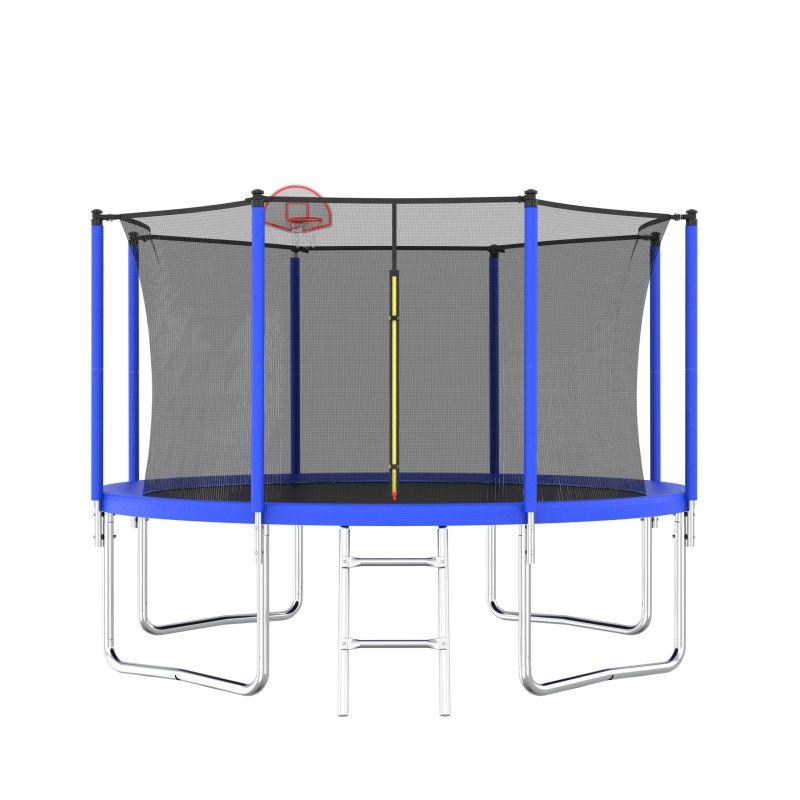
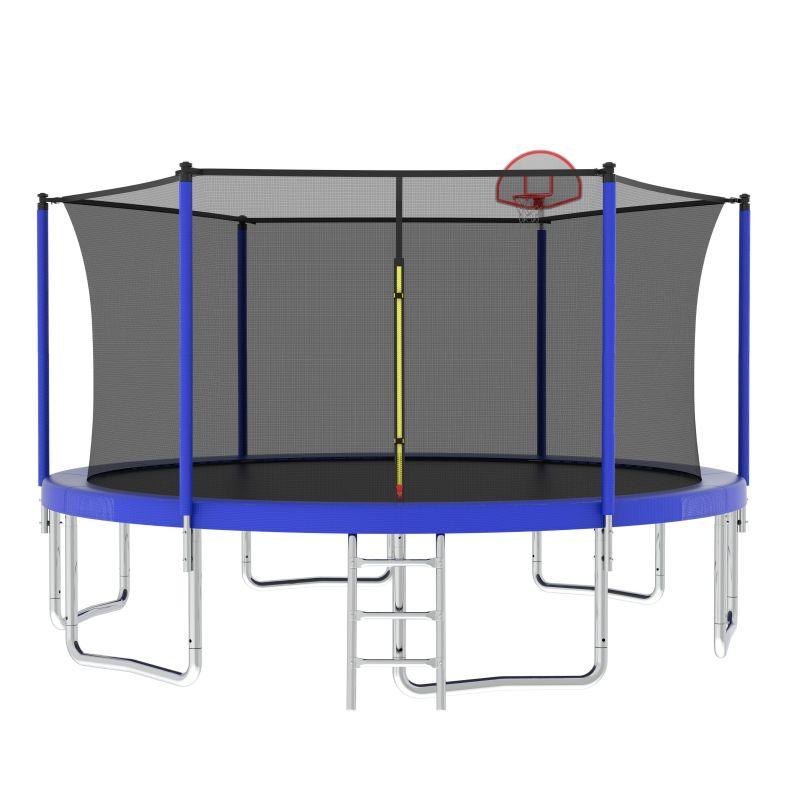
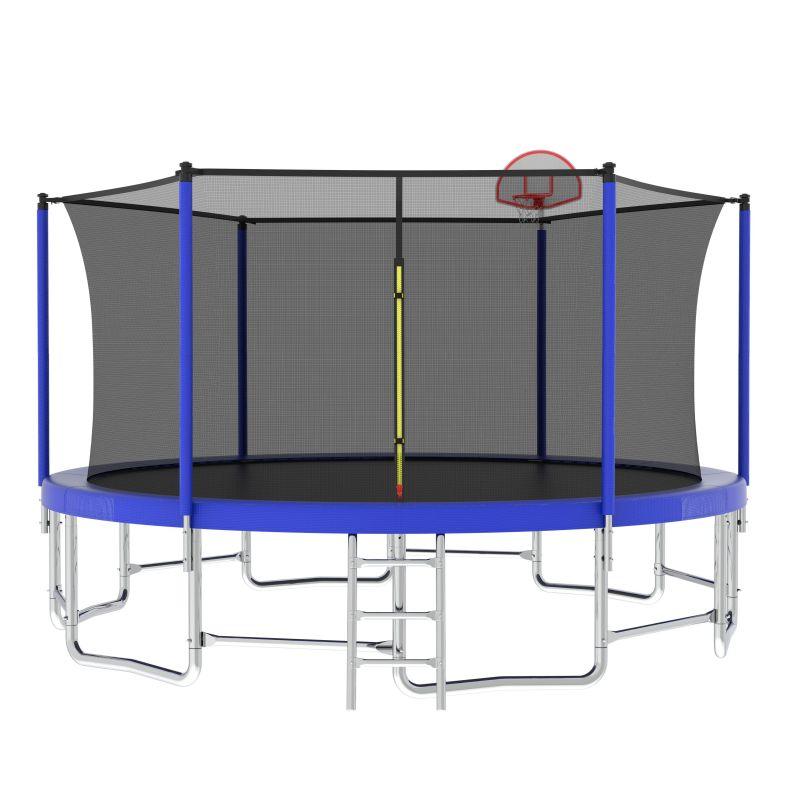
If they love jumping and active play, a trampoline may deserve more of the available space.
If they spend most of their time kicking a ball, keeping a clear section of lawn may be more useful than adding another large structure.
If they prefer imaginative or quieter play, a swing or flexible outdoor area may make more sense.
The best backyard play space is not the one with the most equipment. It's the one that supports the activities your family actually enjoys.
Keep Open Space for Free Play
Open space is easy to overlook when you're planning a children's backyard.
Parents often think of an empty section of grass as unused space. For kids, though, it can become almost anything.
One afternoon it can be a place to kick a soccer ball.
The next day it can become an obstacle course.
On the weekend, it might be used for water games, races, or a family game.
That's why it's worth protecting at least some flexible space rather than filling every corner.
A small backyard with one main piece of equipment and enough room to move can offer more possibilities than a crowded backyard with several large structures.
Work With the Shape of Your Backyard
The shape of the yard matters just as much as its size.
A narrow backyard usually benefits from a layout that follows its length instead of placing large equipment across the widest part.
For example, a long rectangular yard may work better with the main play feature along one side, leaving a clear path or activity area beside it.
A more square backyard gives you greater flexibility. You may be able to place a main activity in one section and leave the center open for games.
Some American homes also have a common patio plus lawn layout. In that case, you don't necessarily need to make the entire backyard a children's area.
The patio can become the family and parent zone, while the lawn becomes the children's active play space.
This creates a backyard that works for both kids and adults without requiring more square footage.
Round vs. Rectangular Trampoline: Which One Is Right for Your Backyard?
Keep the Play Area Visible From the House
A backyard is much easier for families to use when parents can see what's happening.
Before deciding where to put play equipment, think about the views from the kitchen, living room, patio, or other areas where adults spend time.
A play area that is easy to see is more convenient for everyday use. Parents can keep an eye on children while preparing dinner, relaxing outside, or doing other things around the house.
This is especially useful in smaller yards, where one well-planned layout can serve several purposes at once.
Try not to create unnecessary visual barriers between the house and the main activity area.
The backyard should feel connected to the home rather than like a separate zone that requires constant supervision from a different part of the property.
Choose One Main Activity
For a small backyard, it can help to decide on one activity that will be the center of the play space.
That doesn't mean children can only do one thing.
It means the main feature gets priority when you're deciding how to use limited space.
For a family that loves active play, a trampoline can become the main attraction while the remaining lawn stays open for other games.
For a family that plays soccer regularly, keeping enough open grass for kicking and shooting may be more valuable.
For children who enjoy imaginative play, a swing or flexible outdoor area can provide a starting point for many different games.
The important question is:
What will your kids actually use most often?
A play space built around real habits is usually more successful than one designed around a long shopping list.
Think Beyond Permanent Equipment
Not everything in a backyard play space needs to stay there all year.
Portable items can give a small yard much more flexibility.
A few balls, cones, frisbees, jump ropes, or other easy-to-store toys can create new activities without taking up permanent floor space.
Storage also matters.
When outdoor toys are easy to put away, you can quickly turn the yard from a play area into a family gathering space.
This is particularly useful for families who use the same backyard for multiple purposes, such as outdoor meals, entertaining friends, or relaxing in the evening.
Make Room for Parents, Too
A backyard play space should work for the whole family.
If every available section is dedicated to children's equipment, parents may end up standing on the sidelines with nowhere comfortable to sit.
Even a small seating area can make a big difference.
A chair or small patio table gives parents a place to relax, help with games, or simply watch their children play.
It also makes it easier for the backyard to become a place where the family spends time together instead of a space that is used only by kids.
The best layout often creates a natural connection between the children's play area and the family seating area.
Design for Different Ages
If you have more than one child, think about how different ages will use the same space.
A younger child may need a simple open area for running and exploring.
An older child may want space for sports or more challenging activities.
You don't necessarily need separate play zones for each child.
Instead, choose activities that can be adjusted.
A soccer game can be played from different distances.
An obstacle course can be made easier or harder.
A jumping activity can change with age and ability.
This allows siblings to share the same backyard without requiring more equipment or more space.
A Simple Small-Backyard Layout
Imagine a backyard that's approximately 30 feet by 20 feet, with a patio connected to the house.
Instead of filling the entire yard, you could create three simple areas.
The patio becomes the family and parent area, with seating and easy access to drinks or snacks.
One side of the lawn contains the main play feature.
The remaining section stays open for running, ball games, obstacle courses, or whatever the kids come up with that day.
The important part isn't the exact measurements.
It's the idea behind the layout:
One main feature + open play space + family space.
That combination can make a small backyard feel much more useful.
Let the Space Change With Your Family
Children's interests change quickly.
A game they love at age five may not be as exciting a few years later.
That's another reason not to design every inch of a small backyard around one specific activity.
Leave some room for change.
An open area that works for running today could become a soccer practice area later. A trampoline might become part of a different set of games as children grow. Outdoor toys can be rotated depending on the season.
A flexible backyard can stay useful much longer than a highly specialized one.
Small Backyard, Big Possibilities
You don't need a huge yard to give your children a great place to play.
Start with the space you actually have. Measure it carefully, think about how your family uses the yard, choose the activities your children enjoy most, and leave enough room for free play.
Most importantly, don't assume that every square foot needs to be filled.
Sometimes the best part of a backyard is the space you intentionally leave open.
A small backyard can be a place to jump, run, kick a ball, play games, relax, and spend time together.
At MERSCO, we believe backyard play isn't about having the biggest space. It's about making the space you have work for your family.
Create more possibilities in your backyard with play equipment designed for everyday family fun.

Leave a comment