




Trampolines are an excellent tool for kids to release energy and improve balance, but choosing the wrong size can turn fun into a hazard in an instant. As a parent, are you struggling with "what size trampoline is suitable for what age"?Combining recommendations from child development experts and safety test data, we’ve prepared an age-based purchasing guide to ensure every child can enjoy the freedom of jumping safely!
1. Under 3 Years Old: 28-Inch & 36-Inch Mini Trampolines
Why We Recommend:
Low-to-the-Ground Design (<30cm): Low center of gravity, less likely to fall, perfect for toddlers just learning to walk.
Space-Friendly: Diameter of 0.7-0.9 meters, easily placed in living rooms or bedrooms for easy supervision.
Soft-Edge Protection: Fully padded frames to prevent bumps and bruises.
Scientific Basis:
The American Academy of Pediatrics (AAP) notes that young children have soft bones and weak balance, making low mini trampolines ideal for reducing the risk of injury.
Interactive Tip: Parents can gently hold their child’s hands to guide "sit jumps" or "bar-assisted jumps," limiting sessions to 15 minutes daily.
2. 3-5 Years Old: 55-Inch Standard Trampoline
Why We Recommend:
Safe Weight Limit (≤50kg): Suitable for preschooler weight, with softer spring rebound.
Upgraded Safety Net: Height increased to 1.2 meters to prevent side falls; mesh holes tightened to 3cm to avoid finger entrapment.
Matched Motor Skills: A 1.4-meter diameter provides enough space for running, jumping, and spinning, promoting vestibular development.
Scientific Basis:
A study in the European Journal of Pediatrics shows that 10 minutes of daily jumping for 3-5-year-olds can increase lower limb strength by 30%.
Warning: No multiple users at once! Children at this age lack spatial awareness and are prone to collisions.
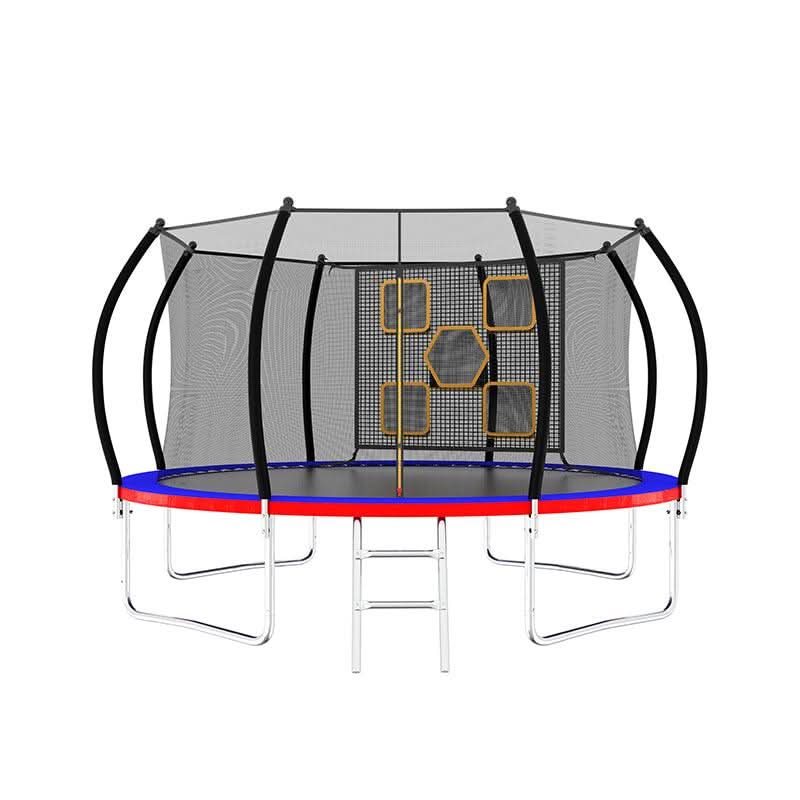
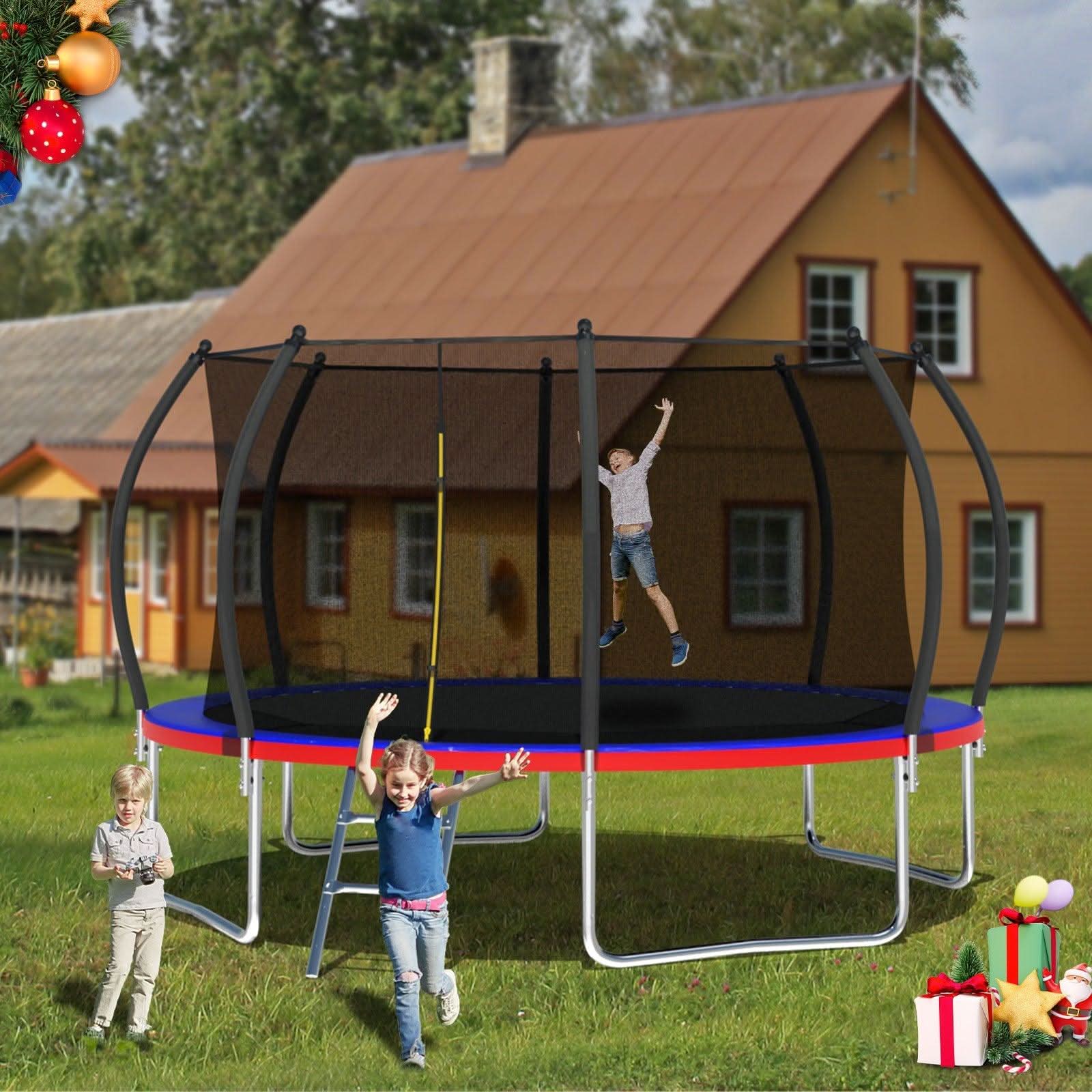
3. 6 Years and Older: Large Trampolines (≥12 Feet/3.6 Meters)
Why We Recommend:
High-Strength Frame: Galvanized steel pipes + W-shaped supports, supporting up to 150kg for high-impact teen activities.
Professional Safety Net: Double-layer polyethylene net + spring covers, certified by ASTM international safety standards.
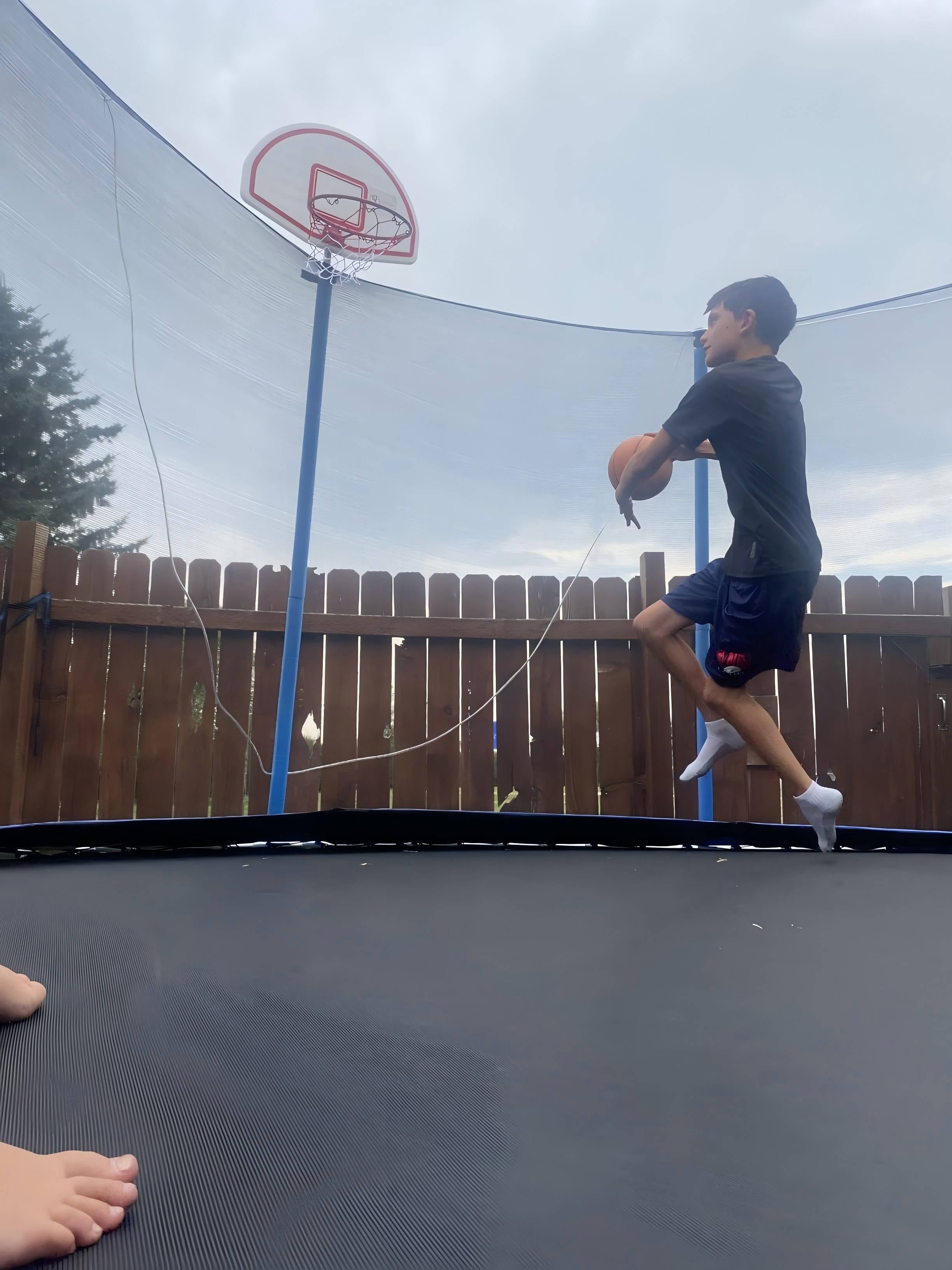
Expanded Play Options: Can be paired with basketball hoops or ball games, unleashing older kids’ creativity.
Scientific Basis
Harvard Medical School recommends that children aged 6 and above engage in at least 1 hour of moderate-to-vigorous activity (like trampolining) daily to prevent obesity and boost cardiovascular health.
Parent Must-Read: Check spring tension regularly (every 6 months) to avoid accidents caused by metal fatigue.
4. Why Age-Based Sizing is Crucial
Developmental Differences:
Children under 3 have weaker spine pressure tolerance and need limited jump heights.
Kids over 6 have mature muscles and bones, allowing them to handle greater impact.
Risk Control:
Small trampolines are prone to tipping for teens, while large ones are too intense for toddlers.
Psychological Needs:
Older kids crave challenging moves (like flips), while younger ones rely on "safety-first designs."
5. FAQs for Parents
Q: Can a 2-year-old use a 55-inch trampoline?
Not recommended! The large space can disorient toddlers, and the spring rebound exceeds their muscle control.
Q: How to judge product quality?
Look for three key safety certifications:
✓ ASTM F381 (U.S. Material Safety Standard)
✓ TÜV GS (EU Anti-Fall Test)
✓ SGS (Heavy Metal and Material Toxicity Test)
Q: Can I buy a second-hand trampoline?
Key checks:
✓ No tears in the safety net ✓ No rust at weld points ✓ No deformed springs.
Kommentar hinterlassen